
A chromatography column is a tube used to hold a stationary phase while a liquid mobile phase moves through it. In many chemistry labs, glass columns are used for gravity or low-pressure purification work.
Buying the right column is mostly about fit. The column has to match the sample amount, media, flow-control style, solvent, receiving vessel, and support hardware.
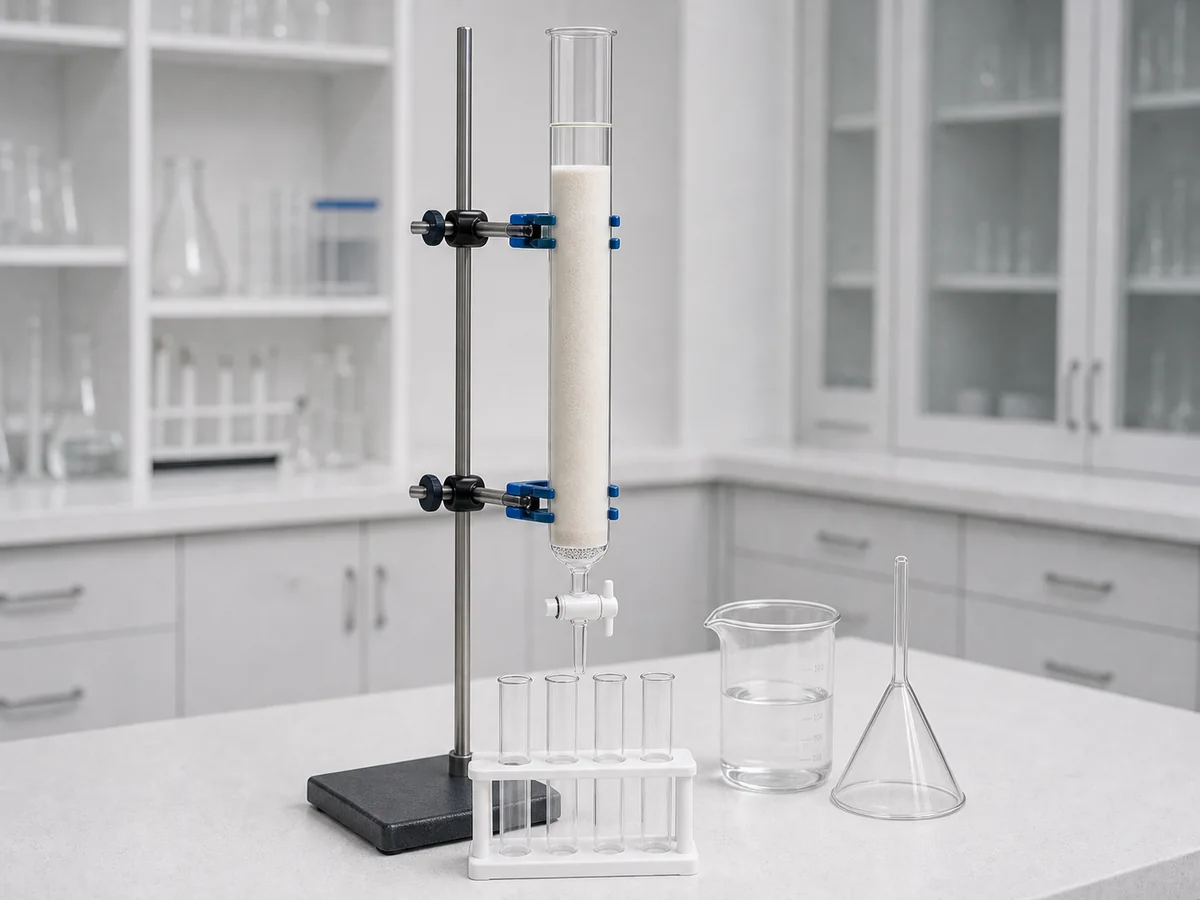
Quick answer: how do you choose a chromatography column?
Choose a chromatography column by inner diameter, length, bed volume, reservoir size, frit or plug style, stopcock material, connection type, and solvent compatibility. For B2B orders, also confirm product code, packing, and replacement-part availability.
| Decision | Why it matters |
|---|---|
| Inner diameter | Affects bed width, sample loading, and flow behavior |
| Length | Affects bed height and separation space |
| Reservoir | Gives extra solvent headroom |
| Fritted disc | Supports media and affects flow |
| Stopcock | Controls drainage and solvent contact |
| Joint or outlet | Must fit receiving glassware and tubing |
| Glass type | Must fit lab use and cleaning method |
What a chromatography column does
A chromatography column holds the material that separates a mixture. The sample is introduced at the top, then solvent moves through the bed. Different compounds move at different speeds, allowing the lab to collect fractions.
A simple teaching setup may use a plain glass column with a stopcock. A purification lab may need columns with reservoirs, fritted discs, standard joints, or pressure-capable accessories. The method should drive the purchase.
If a buyer only says chromatography column, ask follow-up questions. A small gravity column for a school lab is not the same purchase as a larger purification column with a frit and PTFE stopcock.
Main parts of a glass chromatography column
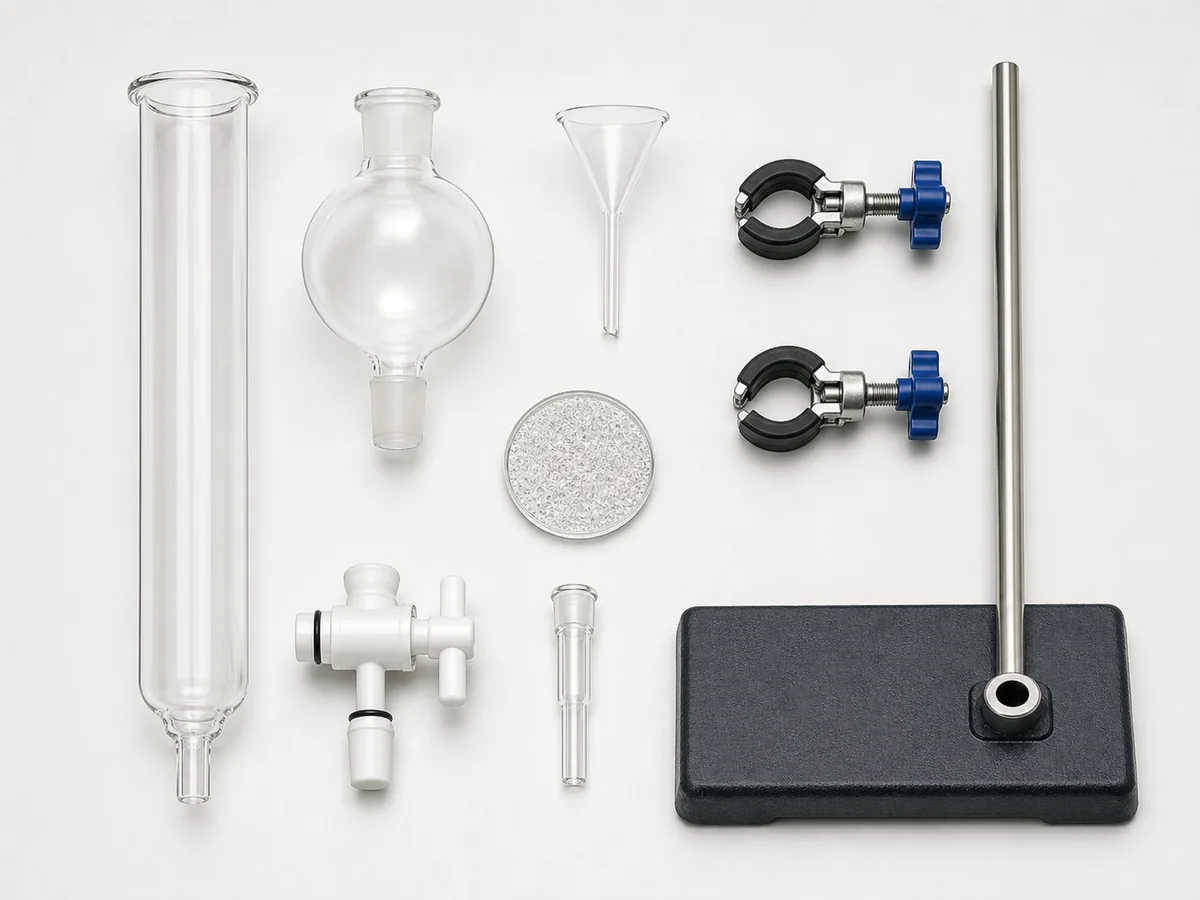
A typical glass chromatography column may include:
- Glass tube body
- Top reservoir or open top
- Fritted disc or support plug
- Stopcock or valve
- Outlet stem or joint
- Ground joint or cap option on some models
- Clamp area for support
Each part affects daily use. A reservoir reduces refill frequency. A frit supports packing media but must match the particle size and cleaning method. A stopcock controls flow, but the material must fit the solvent system.
Column size and bed volume
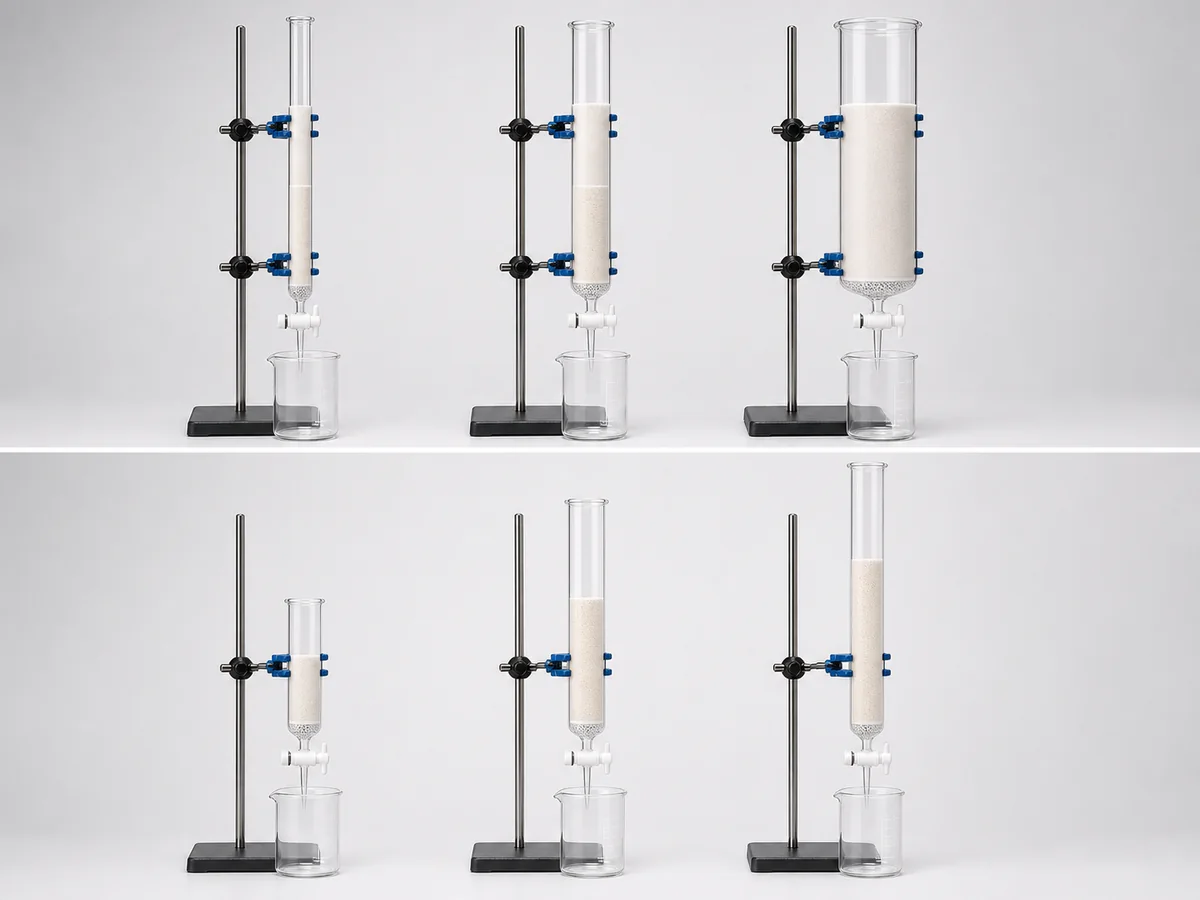
Column diameter and length shape the bed. A narrow column may suit small samples and solvent-saving work. A wider column can handle more sample, but it uses more media and solvent.
Do not choose the largest column by default. Oversized columns waste packing material and can make a method harder to repeat. Undersized columns can overload the bed and reduce separation quality.
For procurement, ask the lab to provide the usual sample size, media type, and solvent system. If that information is missing, list the column dimensions clearly and ask the user to confirm before ordering.
Fritted disc, glass wool, and stopcock choices
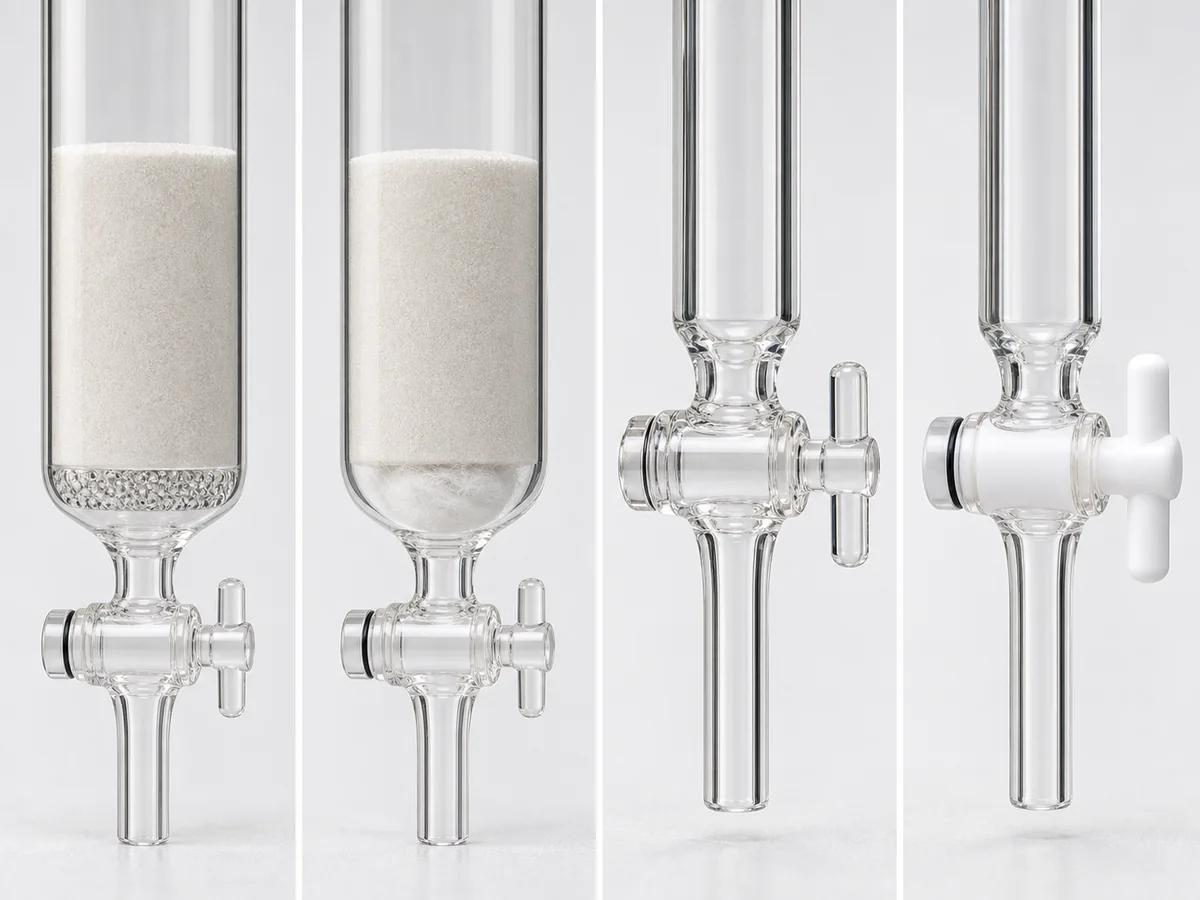
Some columns use a fritted glass disc to support the stationary phase. Others use glass wool, cotton, sand, or another support based on the method. A frit can give a neat support surface, but it also adds cleaning and compatibility questions.
Stopcock material matters too. Glass stopcocks and PTFE stopcocks have different handling and compatibility profiles. Many buyers prefer PTFE stopcocks for easy operation, but the final choice should follow the solvent and method requirements.
If the lab uses aggressive solvents, strong bases, or special cleaning procedures, confirm compatibility before ordering. Do not rely on a catalog photo alone.
Buying checks for chromatography columns
Use this checklist before bulk ordering:
- Inner diameter and total length
- Working bed height or bed volume, if specified
- Reservoir capacity
- Frit porosity or support style
- Stopcock material and bore size
- Outlet type and receiving vessel fit
- Top connection or cap style
- Solvent and cleaning compatibility notes
- Product code and repeat-order record
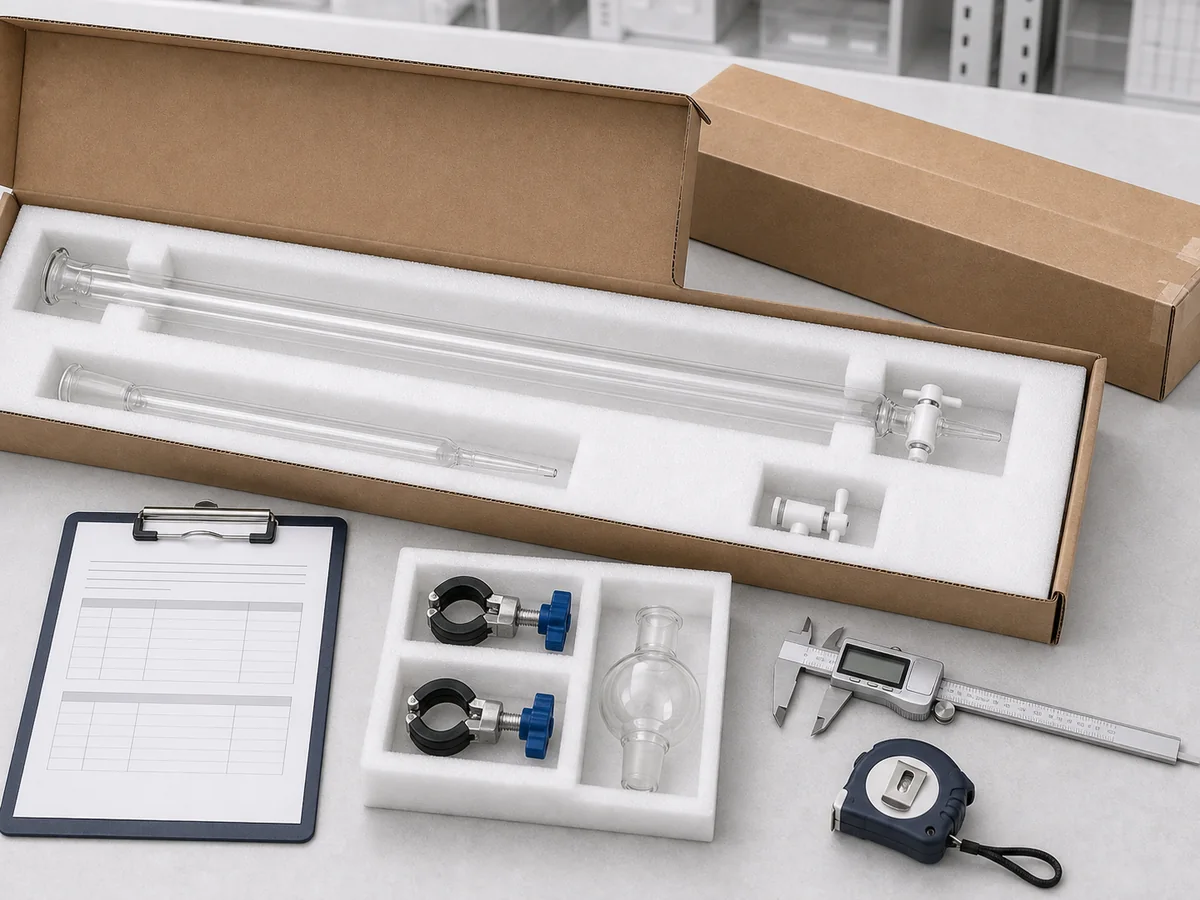
- Export packing for long glass columns
- Spare stopcocks, clips, adapters, or replacement columns
Long glass columns need careful packing. Ask for carton design and protection if the order will ship internationally.
Where chromatography column orders go wrong
Most wrong orders start with missing dimensions. The buyer asks for a chromatography column, but does not specify inner diameter, length, frit, reservoir, or stopcock. The supplier then has to guess, and the column may not match the method.
Another common issue is solvent compatibility. The glass body may be fine, but the stopcock, seal, tubing, or cap may not suit the solvent system. If the lab uses aggressive solvents or special cleaning steps, state that early and ask for product guidance.
Packing also needs attention. A long glass column with a side stopcock can be harder to ship than short, simple glassware. Export orders should use protective packaging around the column body, stopcock, and outlet stem.
Quote-ready chromatography column specification
A useful request can be written like this: glass chromatography column, inner diameter, length, reservoir capacity, frit type or porosity if known, stopcock material, outlet style, quantity, destination country, and packing requirements.
If the lab is replacing an existing column, add photos and product codes. If the column will connect to other glassware, include joint sizes and receiving vessel details. These small details reduce back-and-forth and help the supplier quote the correct column on the first pass.
How to compare chromatography column quotes
Chromatography column quotes should be compared by dimensions and flow-control parts. Check inner diameter, total length, reservoir capacity, frit type or porosity, stopcock material, outlet style, and top connection. A plain open column is not equal to a reservoir column with a frit and PTFE stopcock.
If the lab works with solvents that stress seals or stopcock materials, ask for compatibility notes before ordering. If the column is part of a larger system, check whether the outlet fits the receiver, tubing, or adapter already in use.
Long glass columns also need careful packing. Ask for protection around the stopcock, outlet stem, and open rim. These areas can break during international shipping if the carton is built for simple cylinders only.
Sample quote request for this topic
A useful request format is: glass chromatography column, inner diameter, length, reservoir capacity, frit or no frit, frit porosity if known, stopcock material, outlet style, quantity, destination country, packing requirements, and spare part needs.
If replacing an old column, attach photos and measurements. Guessing from a catalog image often leads to the wrong column size.
Internal links for buyers
Start with the chromatography glassware category. If your workflow also needs collection vessels or preparation glassware, compare the main products catalog and related flasks.
For a quote, send column dimensions, frit or stopcock requirements, quantity, destination country, and packing needs through the contact page.
FAQ
What is a chromatography column used for?
It holds a stationary phase so a liquid mobile phase can separate compounds as they move through the bed.
What is a fritted chromatography column?
It is a column with a fritted glass disc near the outlet. The frit supports the bed and affects flow, cleaning, and media compatibility.
Should I choose a PTFE stopcock?
A PTFE stopcock can be useful for easy flow control, but the solvent system and method should decide the final choice.
What information should buyers provide?
Provide column diameter, length, reservoir needs, frit details, stopcock type, quantity, destination country, and packing requirements.