
A laboratory distillation apparatus is a set of glassware and support parts used to separate liquid components by vaporization and condensation. The exact setup depends on the method, sample, temperature range, pressure condition, and lab SOP.
For buyers, the goal is not only to buy a flask and condenser. The goal is to make sure every joint, adapter, receiver, clamp, and replacement part fits the workflow.
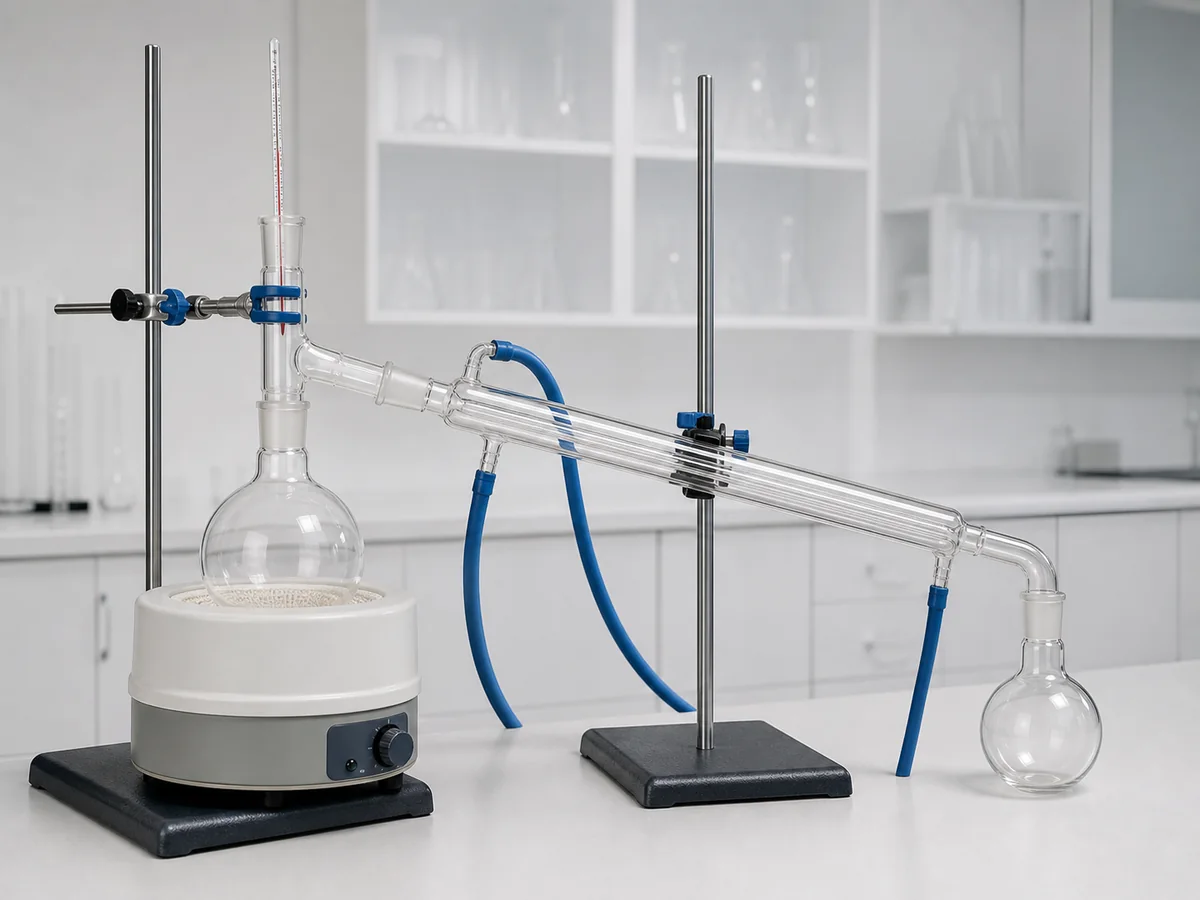
Quick answer: what is in a distillation apparatus?
A basic distillation apparatus often includes a boiling flask, distillation head or adapter, thermometer adapter, condenser, receiving adapter, receiving flask, support stand, clamps, tubing, and a controlled heat source. Fractional, vacuum, and short-path setups add or change parts.
| Part | Main role | Buyer check |
|---|---|---|
| Boiling flask | Holds the liquid mixture | Capacity, joint size, shape |
| Distillation head | Directs vapor path | Joint layout and thermometer port |
| Thermometer adapter | Positions thermometer or probe | Fit and seal style |
| Condenser | Cools vapor into liquid | Type, length, hose connection, joint size |
| Receiver adapter | Guides distillate to receiver | Vacuum or vent design if needed |
| Receiving flask | Collects distillate | Capacity and joint fit |
| Fractionating column | Improves separation in fractional work | Length, packing, joint size |
| Clamps and stand | Hold glassware in place | Stable support for full setup |
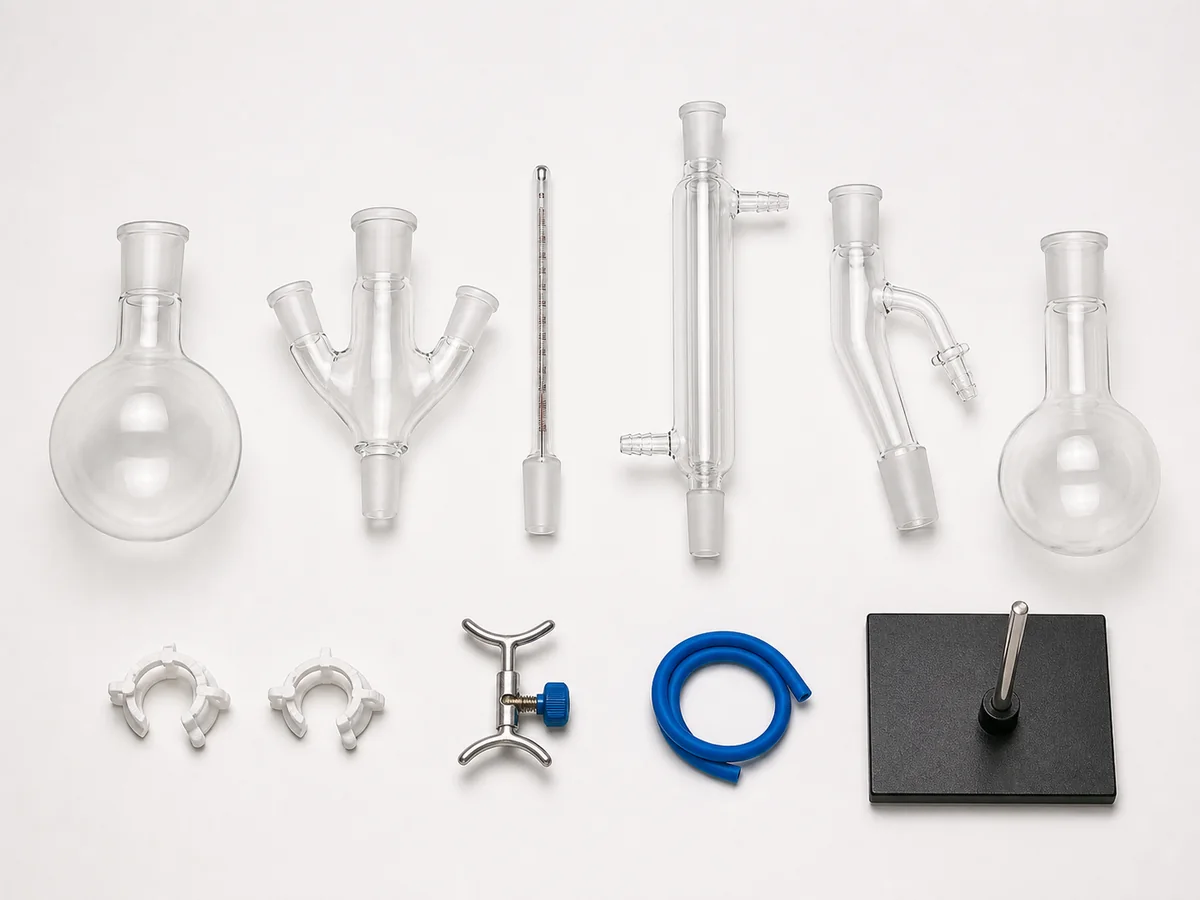
Simple distillation apparatus
Simple distillation is often used when components have a clear boiling-point separation or when the goal is basic solvent removal. A simple setup usually has a boiling flask connected to a distillation head, condenser, and receiver.
The buyer should match flask capacity to the working volume. A flask that is too small may foam or bump. A flask that is far too large may heat poorly. The lab method should guide the size.
The condenser also matters. Liebig, Allihn, Graham, and other condenser types serve different workflows. Do not swap condenser types without checking the method and glassware fit.
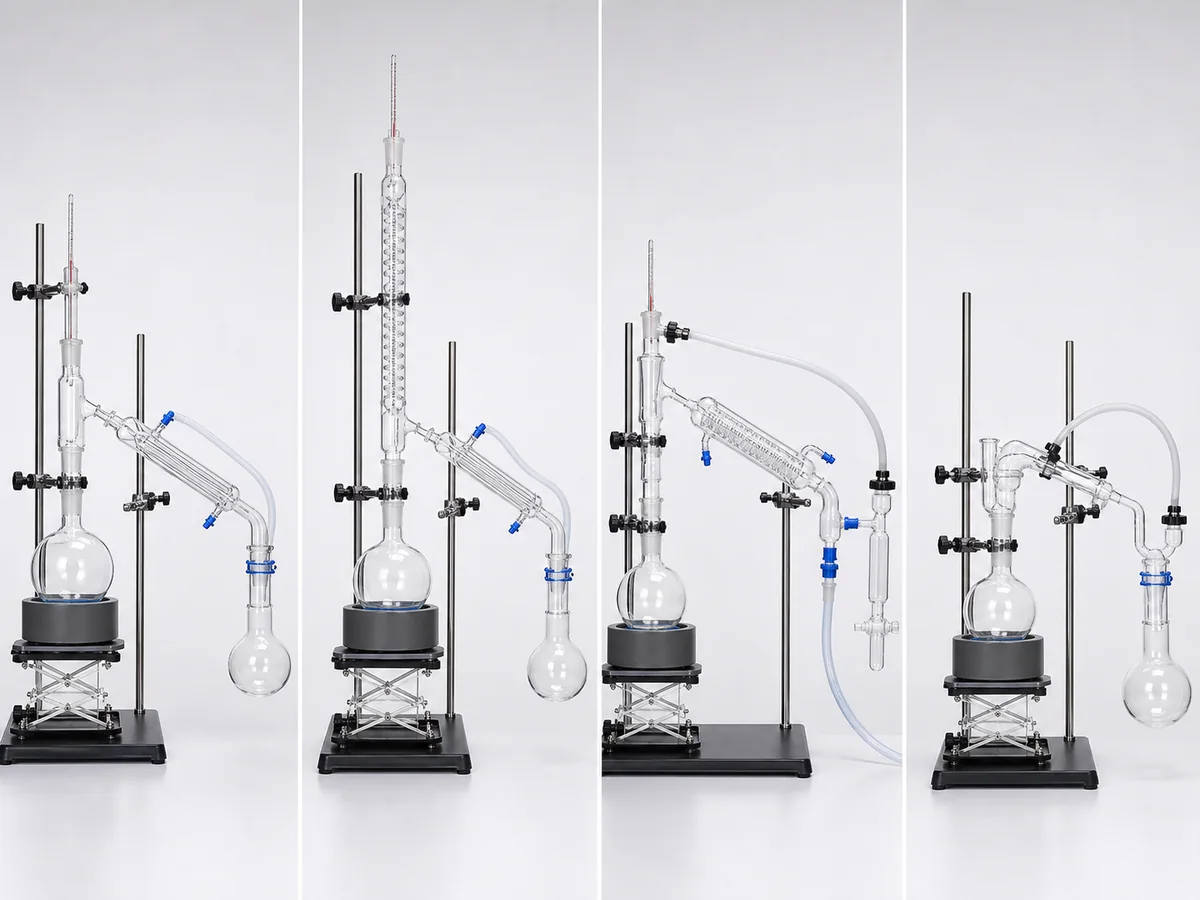
Fractional, vacuum, and short-path setups
Fractional distillation adds a fractionating column between the boiling flask and distillation head. The column gives vapor and condensate more contact, which can improve separation for closer-boiling liquids.
Vacuum distillation uses lower pressure to reduce boiling temperature. It needs glassware and connections that are suitable for vacuum work. Do not assume every flask, adapter, or receiver can be used under vacuum.
Short-path distillation reduces the vapor travel distance. It is often used for small batches, heat-sensitive materials, or workflows where a compact vapor path is preferred. A short-path head, receiving adapter, vacuum connections, and cold trap may be part of the system.
Glassware selection checks
Most buying errors come from fit problems. A good distillation product list should include more than product names.
Check these details:
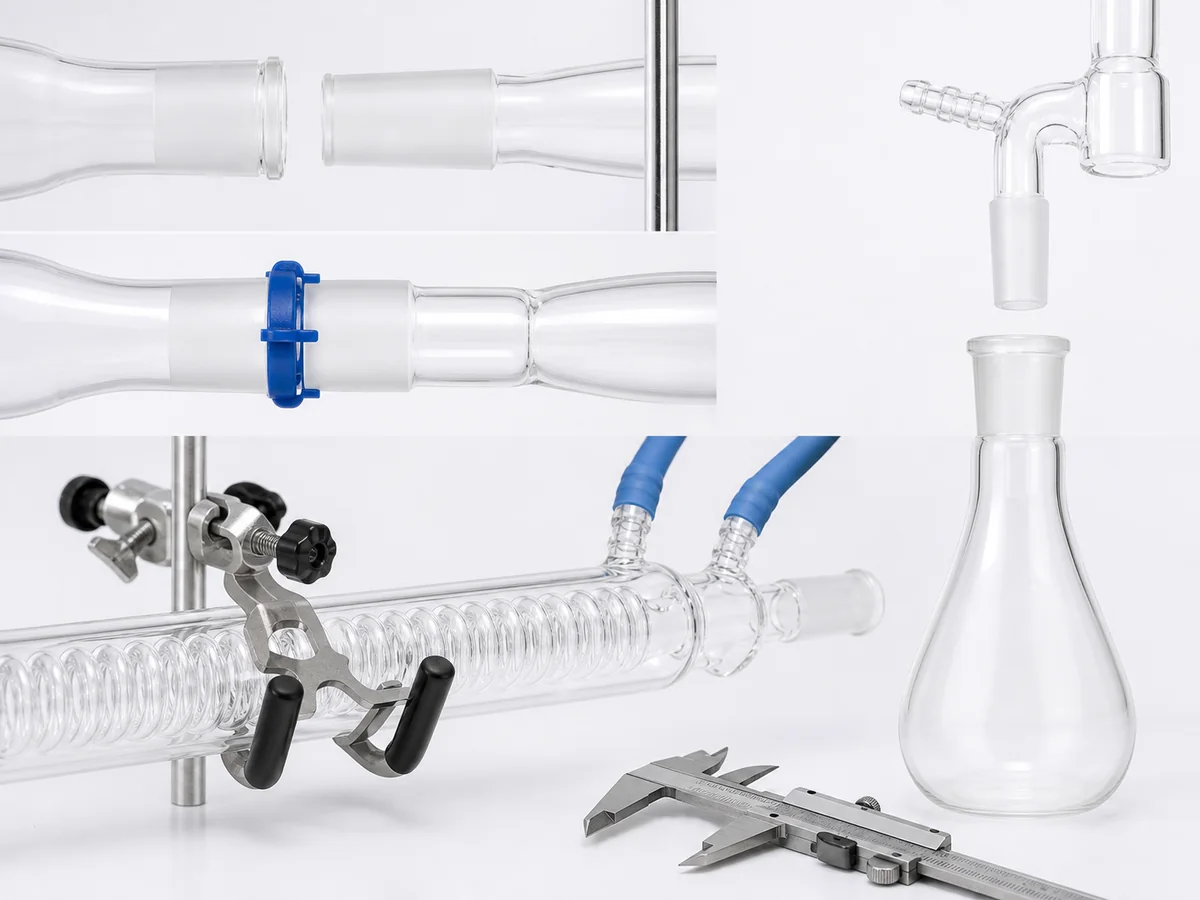
- Joint size and gender for every glass connection
- Flask capacity and shape
- Condenser type, length, and hose connection size
- Thermometer or probe adapter size
- Receiver style and number of receiving flasks
- Vacuum compatibility when the method requires it
- Stopper, clip, clamp, tubing, and stand needs
- Replacement parts for fragile or high-use items
- Packing method for export shipment
If your team is building a teaching kit, a complete distillation kit may be easier to manage than separate parts. If you are supporting a research lab, separate parts may give better flexibility.
Material and quality notes
Borosilicate glass is common for laboratory distillation glassware because it is a good fit for routine heating and chemical handling when the product is designed for that use. Still, material alone does not define safety.
A jointed distillation setup puts stress on glassware. Poor clamping, unsupported condensers, misaligned joints, and tight tubing can all create breakage risk. Buyers should include clamps, stands, clips, and tubing in the order when the lab does not already have compatible support parts.
For procurement records, keep the product code for each part. Distillation systems often need replacement receivers, adapters, and condensers after normal use.
Building a complete distillation kit
A complete distillation kit should be treated as a matched system. The boiling flask, head, thermometer adapter, condenser, receiver adapter, and receiving flask must connect without forcing joints or leaving unsupported weight. If the kit is for teaching, simple replacement and clear component names are valuable. If it is for research, flexibility and joint compatibility may matter more.
A quote request should include the method type: simple, fractional, vacuum, or short path. It should also state the preferred joint size, working volume, condenser type, and receiver style. If the buyer already owns stands, clamps, tubing, or heat sources, list those details so the new glassware fits the existing bench setup.
Do not forget support items. Clips, clamps, tubing, and stands are not exciting parts of a distillation order, but missing one of them can delay use. For schools, a kit with support hardware may be easier. For established labs, replacement glassware only may be enough.
Replacement parts and reorder planning
Distillation glassware often needs replacement parts over time. Condensers, receivers, adapters, and boiling flasks can break during cleaning, storage, or setup. A purchasing file should keep the product code and joint size for every part.
For distributors, spare receivers and adapters are useful add-on lines. They help customers keep systems running without buying a full kit again. For international shipments, ask for protective packing around sidearms, joints, and long condenser bodies. These areas are more exposed than plain beaker walls.
Quote-ready information
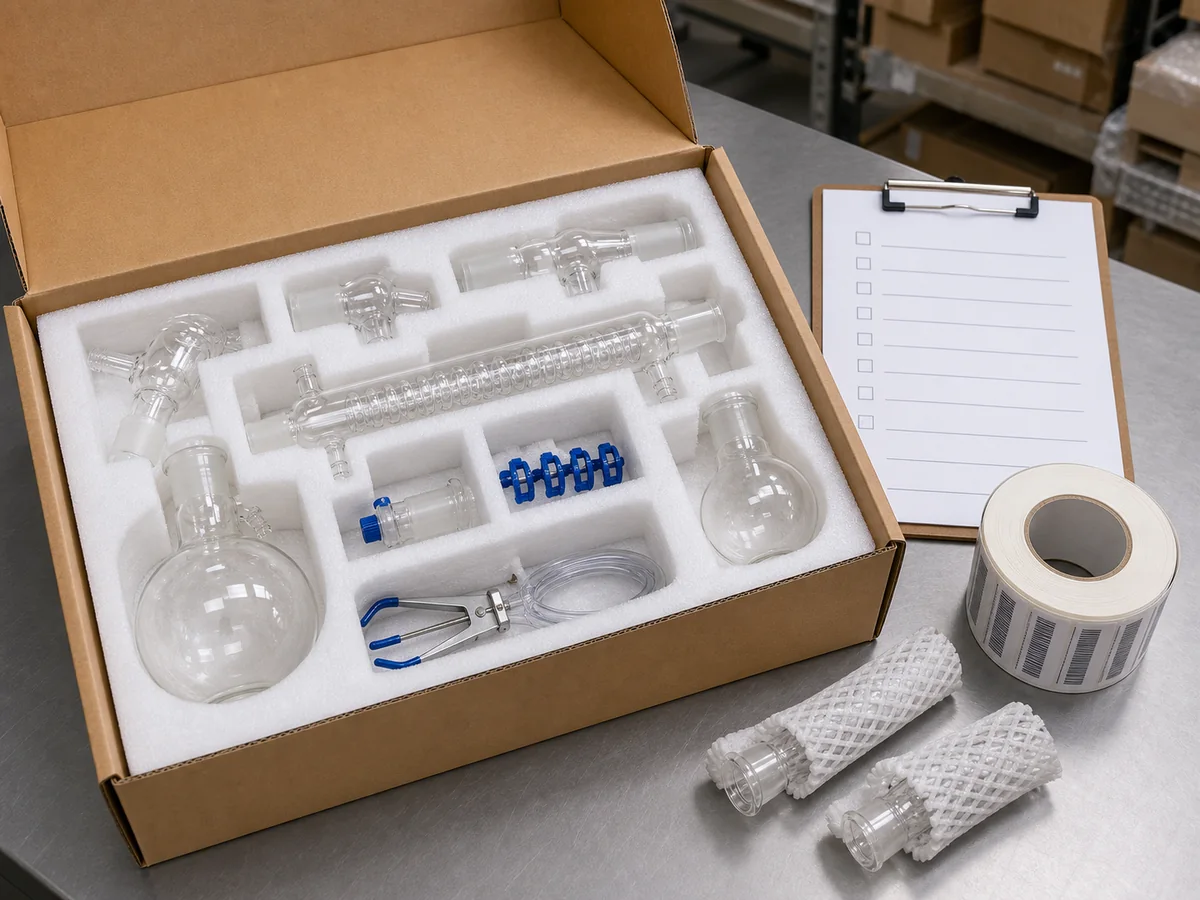
The cleanest quote request includes a setup photo or drawing, the method type, joint sizes, capacities, condenser type, receiver count, quantity, destination country, and packing needs. If OEM cartons or barcode labels are required, include them before pricing. That prevents a second quote round after the supplier has already priced plain cartons.
How to compare distillation apparatus quotes
Distillation quotes should be compared as systems, not loose glassware lists. Check whether each quote includes the same boiling flask, distillation head, thermometer adapter, condenser, receiver adapter, receiving flask, clips, and support accessories.
Joint size is the main fit detail. A quote with 24/40 joints is not the same as a quote with another joint size. Condenser length and hose connection also matter. If the buyer needs fractional distillation, confirm whether a fractionating column is included. If the buyer needs vacuum work, confirm whether the quoted parts are suitable for that use.
Packing has a large effect on the final order quality. Condensers and adapters have sidearms and ground joints that need protection. Ask for glassware packing details before shipping, especially for export cartons.
Sample quote request for this topic
Write the request like this: distillation apparatus for simple, fractional, vacuum, or short-path use; working volume; joint size; condenser type and length; receiver style; number of sets; spare parts; destination country; packing and label requirements.
If you can provide a diagram or photo of the expected setup, include it. That helps the supplier catch missing adapters before the quote is finalized.
Internal links for buyers
Review the distillation glassware category and related condensers, flasks, and laboratory kits.
For a quote, send a setup drawing or product list, joint sizes, capacities, quantities, destination country, and packing requirements through the contact page.
FAQ
What is a distillation apparatus used for?
It is used to separate or purify liquids based on vaporization and condensation behavior. The method depends on the mixture and lab procedure.
What is the difference between simple and fractional distillation apparatus?
Fractional distillation adds a fractionating column. That extra column helps when a method needs more separation than a simple setup provides.
Can any glassware be used for vacuum distillation?
No. Use glassware and connections rated or specified for the required vacuum work. Confirm the product details before ordering.
What should I include in a distillation quote request?
Include method type, joint sizes, capacities, condenser type, receiver style, quantity, destination country, and packing needs.