
Pipette calibration checks whether a pipette delivers or contains the expected volume within the required limits. It matters because small volume errors can affect assays, dilutions, standards, and quality-control results.
This guide focuses on practical buying and lab-management decisions. It is not a replacement for ISO standards, manufacturer manuals, or an accredited calibration provider.

Quick answer: what is pipette calibration?
Pipette calibration is the process of checking pipette volume performance against a defined method and tolerance. For piston-operated pipettes, labs often reference the ISO 8655 standard series and manufacturer instructions.
A calibration program may include:
- Pipette identification and volume range
- Selected test volumes
- Tip type used for testing
- Balance and environmental controls
- Measurement results and uncertainty
- Pass or fail decision based on defined limits
- Adjustment, repair, or removal from service when needed
Why pipette calibration matters
A pipette can look fine and still deliver the wrong volume. Wear, damaged seals, poor tips, user technique, contamination, and heavy use can all change performance.
In a research lab, small errors may affect repeatability. In a QA lab, they may affect release decisions or audit records. In a teaching lab, poor pipettes can make students think their chemistry is wrong when the tool is the problem.
Calibration gives the lab a record. It helps teams decide whether a pipette can stay in service, needs adjustment, or should be repaired or replaced.
ISO 8655 and pipette calibration
ISO 8655 is a standard series for piston-operated volumetric apparatus. ISO 8655-6:2022 covers a gravimetric reference measurement procedure for determining volume.
That does not mean every lab can claim ISO compliance by doing a quick balance check. The applicable part, method, environment, equipment, uncertainty reporting, tip system, and documentation all matter. Use the current official standard, manufacturer instructions, and qualified calibration support when compliance is required.
For article publication, avoid broad claims like ISO certified pipettes unless you have the exact certificate or product documentation. A supplier can sell pipettes and related items without being a calibration lab.
Tip fit and technique affect results
Pipette calibration is not only about the pipette body. The tip is part of the liquid-handling system. A poor fit can leak, change aspiration, or affect repeatability.
User technique also matters. Angle, immersion depth, pre-wetting, speed, temperature, liquid viscosity, and waiting time can affect delivered volume. A good SOP should control these details for the lab’s work.
For procurement, this means tips and pipettes should be sourced together when fit is important. Do not mix random tips into a calibrated workflow without checking compatibility.

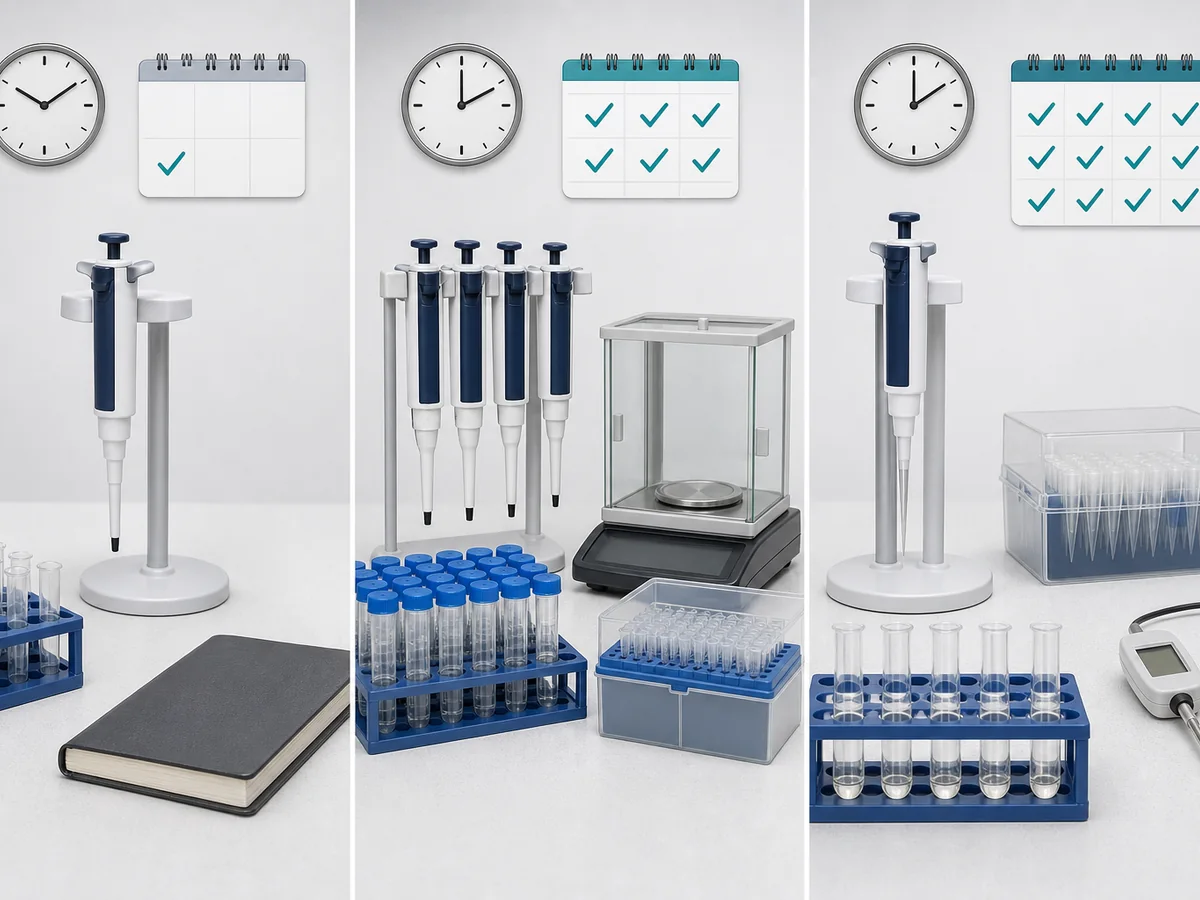
How often should pipettes be calibrated?
There is no single schedule that fits every lab. Calibration frequency depends on use, risk, liquid type, lab policy, audit requirements, and manufacturer guidance.
A low-use teaching pipette may have a different schedule than a heavily used QA pipette in regulated work. Some labs also add routine performance checks between full calibration events.
A practical schedule should answer these questions:
- How often is the pipette used?
- What happens if the volume is wrong?
- Is the pipette used with volatile, viscous, or difficult liquids?
- Are there audit or accreditation requirements?
- Does the manufacturer recommend a service interval?
- Does the lab have trained staff and suitable equipment for checks?
Buying checks for pipettes, tips, and records
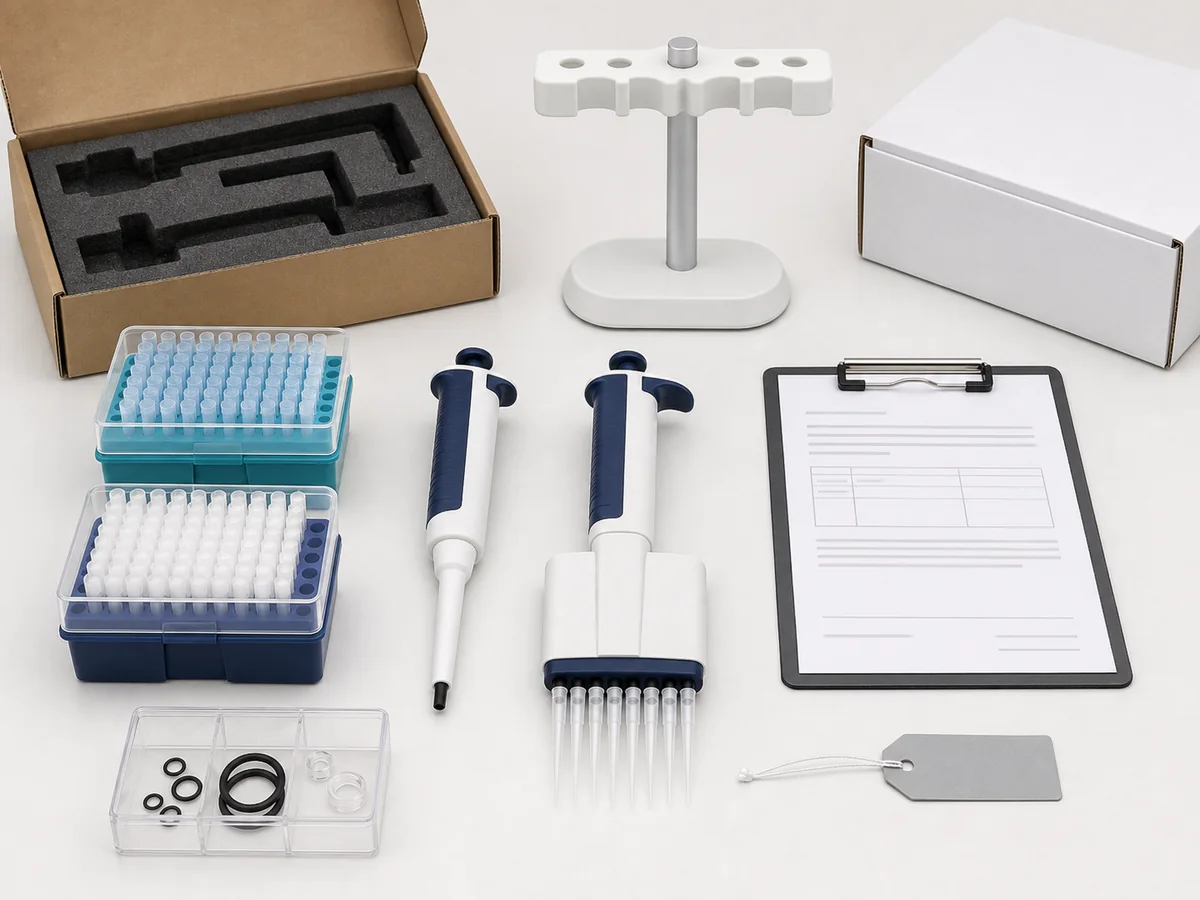
When buying pipettes for a controlled lab, include calibration planning in the purchase.
Check:
- Fixed or adjustable volume range
- Single-channel or multichannel format
- Compatible tip type and packaging
- Calibration certificate or factory test record when offered
- Manufacturer service and adjustment guidance
- Product serial number tracking
- Spare parts and seal availability
- Storage stand or rack needs
- User training and SOP requirements
- Replacement schedule for worn tools
For glass volumetric pipettes, check class, tolerance, volume, marking style, and packing. For piston pipettes, check tips, calibration records, and service route.
Recordkeeping for pipette control
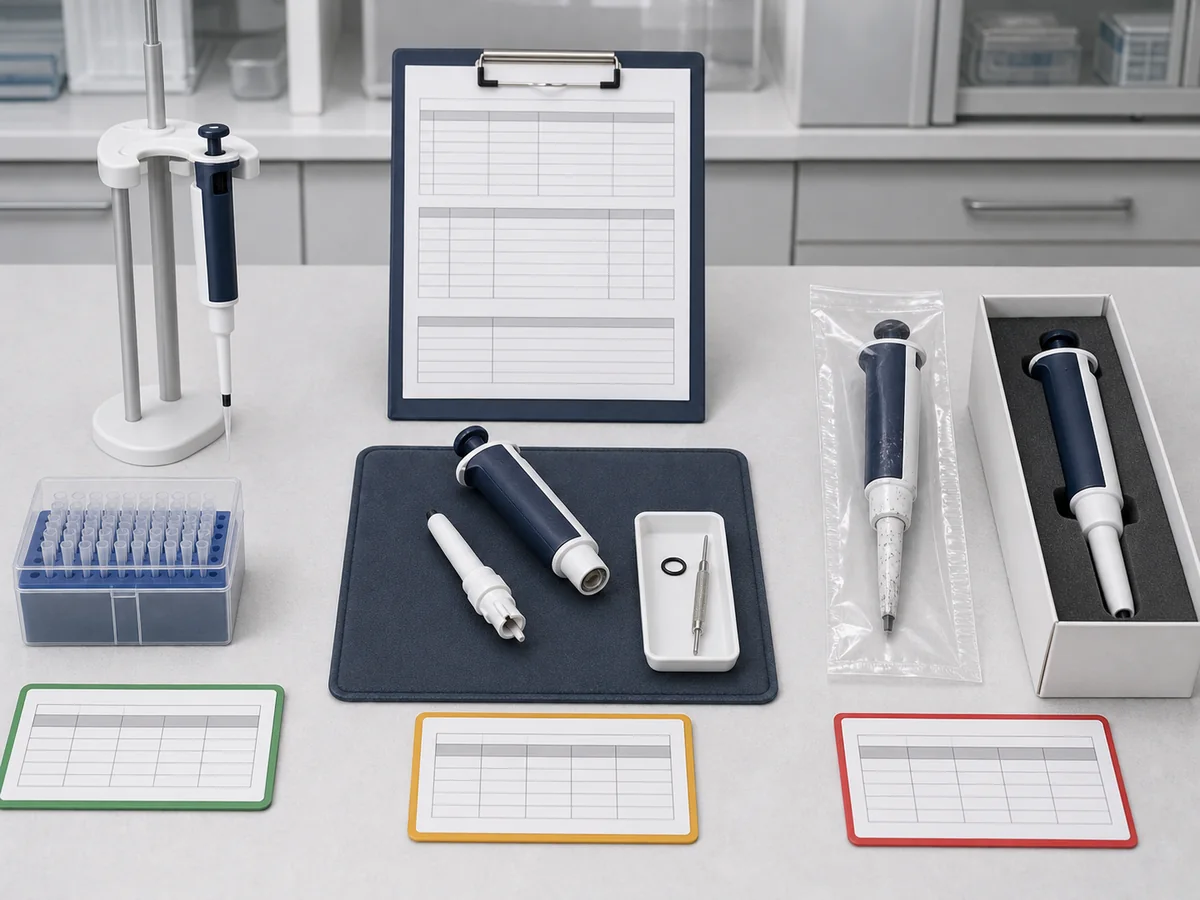
Calibration is only useful when the record is easy to find and understand. Each pipette should have an ID, volume range, location, user group, calibration date, result, next due date, and service note. For adjustable pipettes, record the test volumes used. For multichannel pipettes, each channel may need attention.
Tip type should also be recorded when it affects the method. A pipette tested with one tip may not perform the same way with a poorly fitting substitute. Controlled labs should keep tip brand, model, filter status, and lot details where their SOP requires it.
Procurement can support this by buying pipettes, tips, racks, and service parts as a managed system rather than as unrelated items.
Repair, replace, or remove from service
When a pipette fails a check, the lab has choices. It may be adjusted, repaired, cleaned, sent to a service provider, or removed from use. The right decision depends on cost, risk, service access, and how the pipette is used.
Buying a low-cost replacement can make sense for light-duty teaching work. A regulated QA lab may need a documented repair and calibration path. A high-use research group may need spare pipettes so work does not stop during service.
Supplier boundary for calibration claims
A glassware supplier can help source pipettes, tips, and related labware, but calibration service claims should be handled carefully. Do not state that a supplier provides accredited calibration unless the certificate and scope are available. In product content, it is safer to say that buyers should confirm calibration records, current standards, and service requirements for their own lab.
How to compare pipette calibration-related quotes
A quote for pipettes should not be judged only by the pipette price. Compare the pipette body, compatible tips, calibration or test record, service route, spare parts, and documentation. If a supplier offers a certificate, check what it actually covers and whether it matches your lab requirement.
For piston pipettes, the tip system is part of the measurement setup. A quote that includes compatible tips may be more useful than a lower quote that leaves tips unresolved. For glass pipettes, class, tolerance, marking style, and packing are the main comparison points.
If your lab follows an audit program, ask your quality team what documentation must be stored before placing the order. Procurement should not guess the calibration requirement after the pipettes arrive.
Sample quote request for this topic
Use this format: pipette type, volume range, fixed or adjustable, single-channel or multichannel, compatible tips, calibration or factory test document if available, quantity, destination country, packing, and service or spare part needs.
Add a note that calibration compliance must be confirmed by the lab’s own SOP, current standards, and approved service provider. This keeps the supplier content accurate and avoids unsupported claims.
Internal links for buyers
Review the pipettes category and related burettes for titration workflows. For broader labware purchasing, use the products catalog.
To request a quote, send pipette type, volume range, tip needs, quantity, destination country, and packing requirements through the contact page.
FAQ
What is pipette calibration?
It is a check of pipette volume performance against a defined method and tolerance.
Does ISO 8655 apply to every pipette?
ISO 8655 applies to piston-operated volumetric apparatus. Glass volumetric pipettes and other glassware may follow different standards or lab methods.
Can I calibrate pipettes in-house?
Some labs can run in-house checks when they have trained staff, suitable equipment, and approved procedures. Compliance work may require an accredited provider or specific documentation.
Do pipette tips affect calibration?
Yes. The tip is part of the system. Use compatible tips and keep tip type consistent for controlled work.