
A beaker is a wide-mouth laboratory vessel used for holding, mixing, stirring, heating, and pouring liquids. It is one of the most common pieces of lab glassware because it is simple, flexible, and easy to handle.
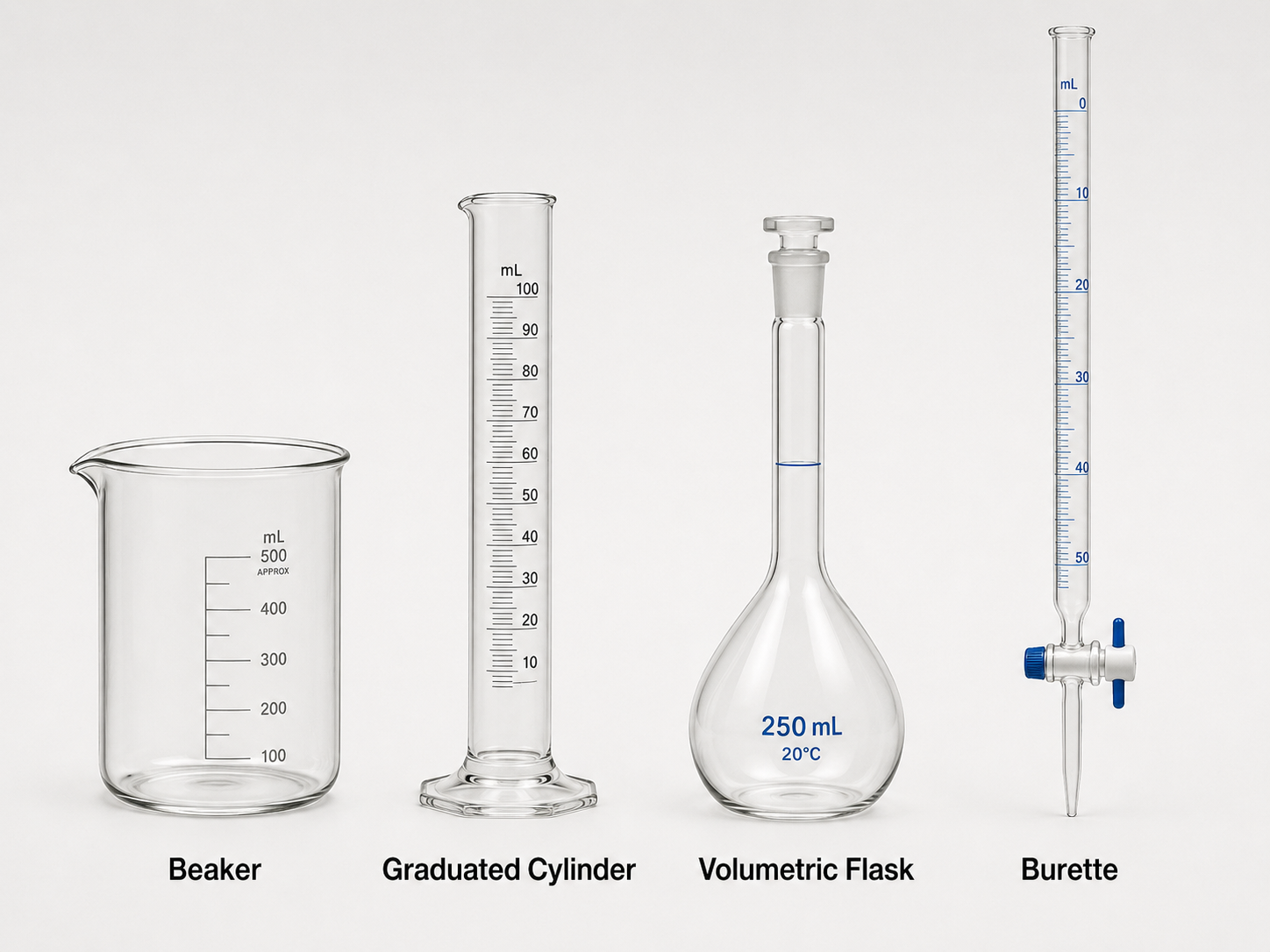
A beaker is not a precision measuring tool. Many beakers have printed graduations, but those marks are normally for rough reference. If the volume needs to be accurate, use a graduated cylinder, volumetric flask, pipette, or burette.
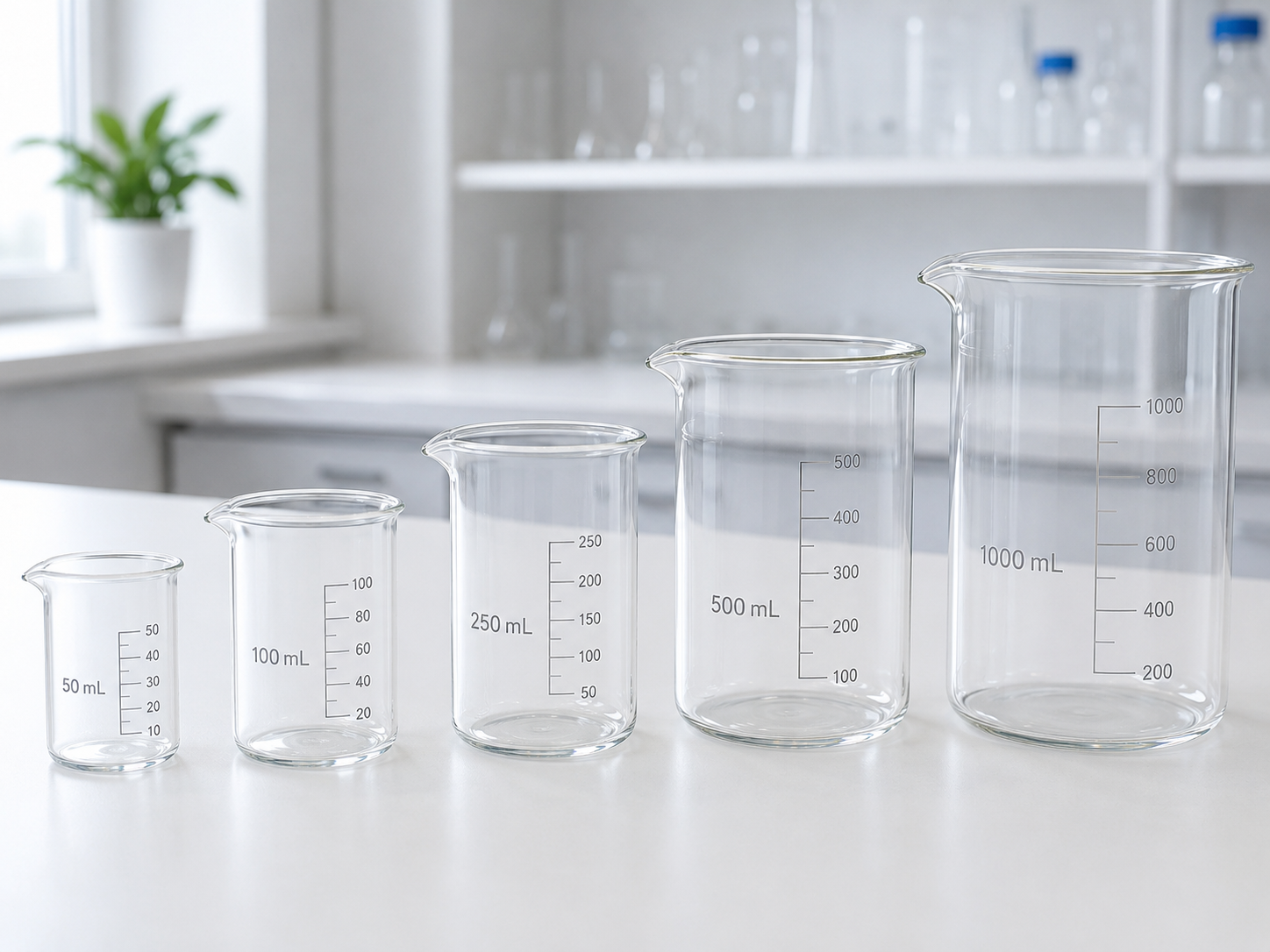
Quick answer: what is a beaker?
A beaker is a cylindrical lab container with a flat bottom and, in many designs, a pouring spout. Labs use beakers for daily bench work, not for high-accuracy measurement.
| Need | Is a beaker a good choice? | Better option when needed |
|---|---|---|
| Hold or mix liquid | Yes | - |
| Stir with a rod or stir bar | Yes | - |
| Pour liquid | Yes | - |
| Read a rough volume | Yes | Graduated cylinder for better reading |
| Prepare one exact volume | No | Volumetric flask |
| Deliver liquid in titration | No | Burette |
If the main need is volume reading, use the graduated cylinder guide instead of treating beaker graduations as precise marks.
What is a beaker used for?
A beaker is used when access matters. The wide opening makes it easy to add solids, stir a solution, insert a thermometer, or pour liquid into another vessel. That is why beakers show up in teaching labs, quality-control labs, and routine chemistry work.
Common beaker uses include:
- Holding liquids during bench work
- Mixing solutions with a rod or magnetic stirrer
- Heating liquids under suitable lab conditions
- Pouring liquid through the spout
- Collecting filtrate or rinse liquid
- Preparing rough volumes before accurate measurement
- Organizing samples during a simple procedure
The practical rule is easy: use a beaker for handling and mixing. Use calibrated glassware for measurement.
Common beaker types
The two common forms are low-form beakers and tall-form beakers. Low-form beakers are often called Griffin beakers. They are shorter and wider, which makes them easy to stir and heat. Tall-form beakers, often called Berzelius beakers, are narrower and taller, which can reduce splashing during some tasks.
Some buyers also ask for heavy-wall beakers, graduated beakers, or borosilicate glass beakers. The right choice depends on the lab’s use, cleaning method, and handling conditions.
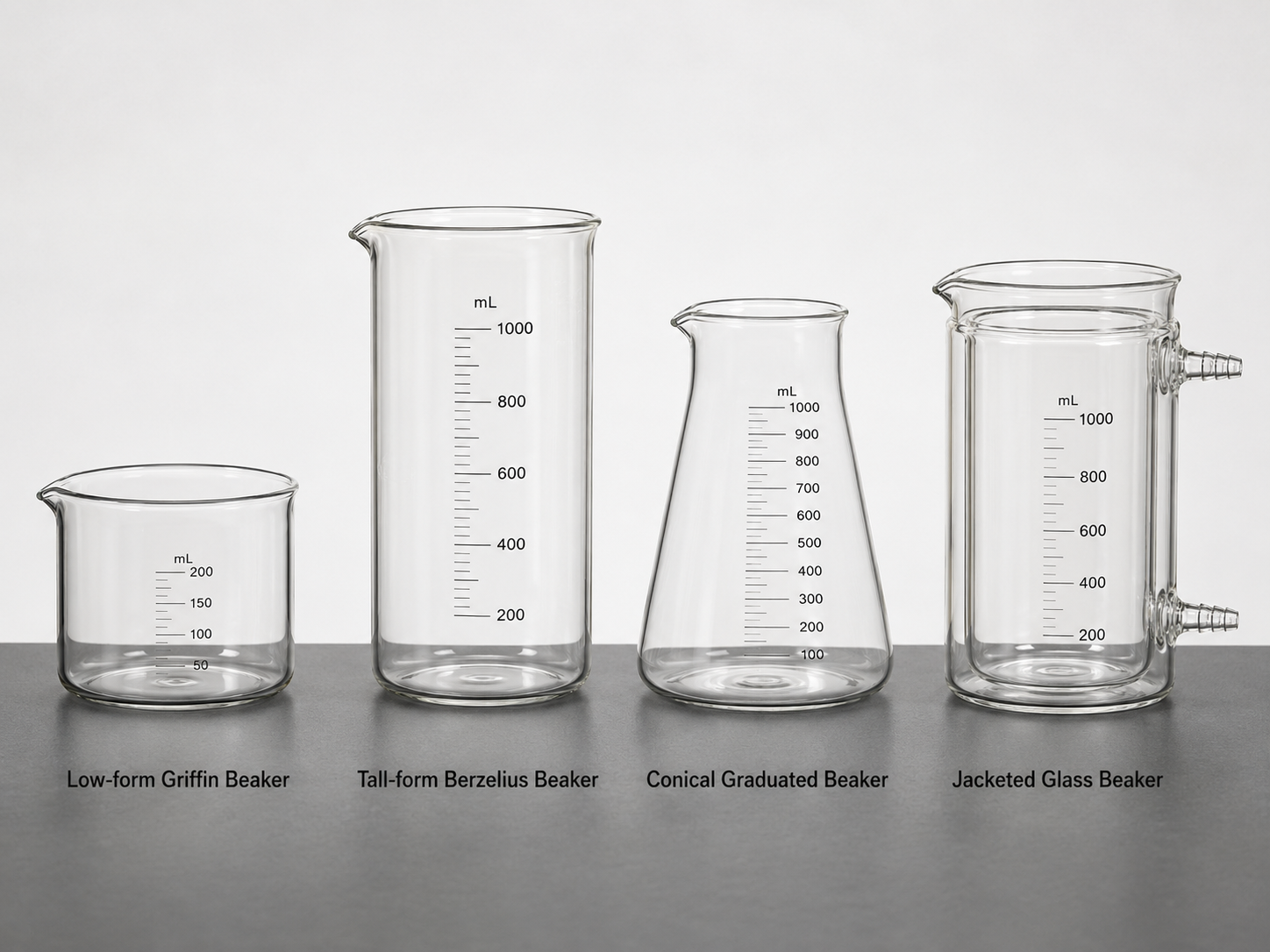
| Beaker type | Good fit |
|---|---|
| Low-form beaker | General mixing, heating, pouring, classroom use |
| Tall-form beaker | Taller liquid column and reduced splash risk |
| Graduated beaker | Rough visual volume reference |
| Heavy-wall beaker | Workflows where sturdier handling is preferred, if specified |
| Borosilicate beaker | Routine lab heating and chemical handling when the product is made for that use |
For a product-level view, compare available laboratory beakers by form, capacity range, graduation style, and packing needs. If the lab needs a general bench beaker, review Low Form Griffin Beaker Wholesale. For workflows where a taller narrow profile is preferred, compare Glass Beaker Tall Form Berzelius Wholesale with the capacity list in the order plan.
Beaker vs flask vs graduated cylinder
A beaker, flask, and graduated cylinder each solves a different problem. The shape tells you a lot about the job.
A beaker gives access and easy pouring. An Erlenmeyer flask is better for swirling because its narrow neck helps reduce splashes. A graduated cylinder is better for measuring volume because its tall narrow shape makes the meniscus easier to read.
For a school lab, buying only beakers is not enough. A useful set often includes beakers for mixing, flasks for swirling, cylinders for volume reading, and volumetric glassware for accurate solution prep.
For a deeper side-by-side comparison, use the beaker vs flask guide before building a school lab glassware list. If the buyer wants a conical beaker for practical liquid handling, Glass Conical Measuring Beakers Graduated Wholesale should be checked separately from Erlenmeyer flasks and measuring cylinders.
Buying checks for lab beakers
Before ordering beakers in bulk, confirm the details that affect daily use and reorder accuracy.
Check:
- Capacity list, such as 50 mL, 100 mL, 250 mL, 500 mL, or 1000 mL
- Low-form or tall-form design
- Glass material
- Graduation style and readability
- Spout shape
- Wall and rim design from the product specification
- Quantity by capacity
- Export packing and breakage protection
- Product code stability for repeat orders
- OEM label, barcode, or carton mark needs
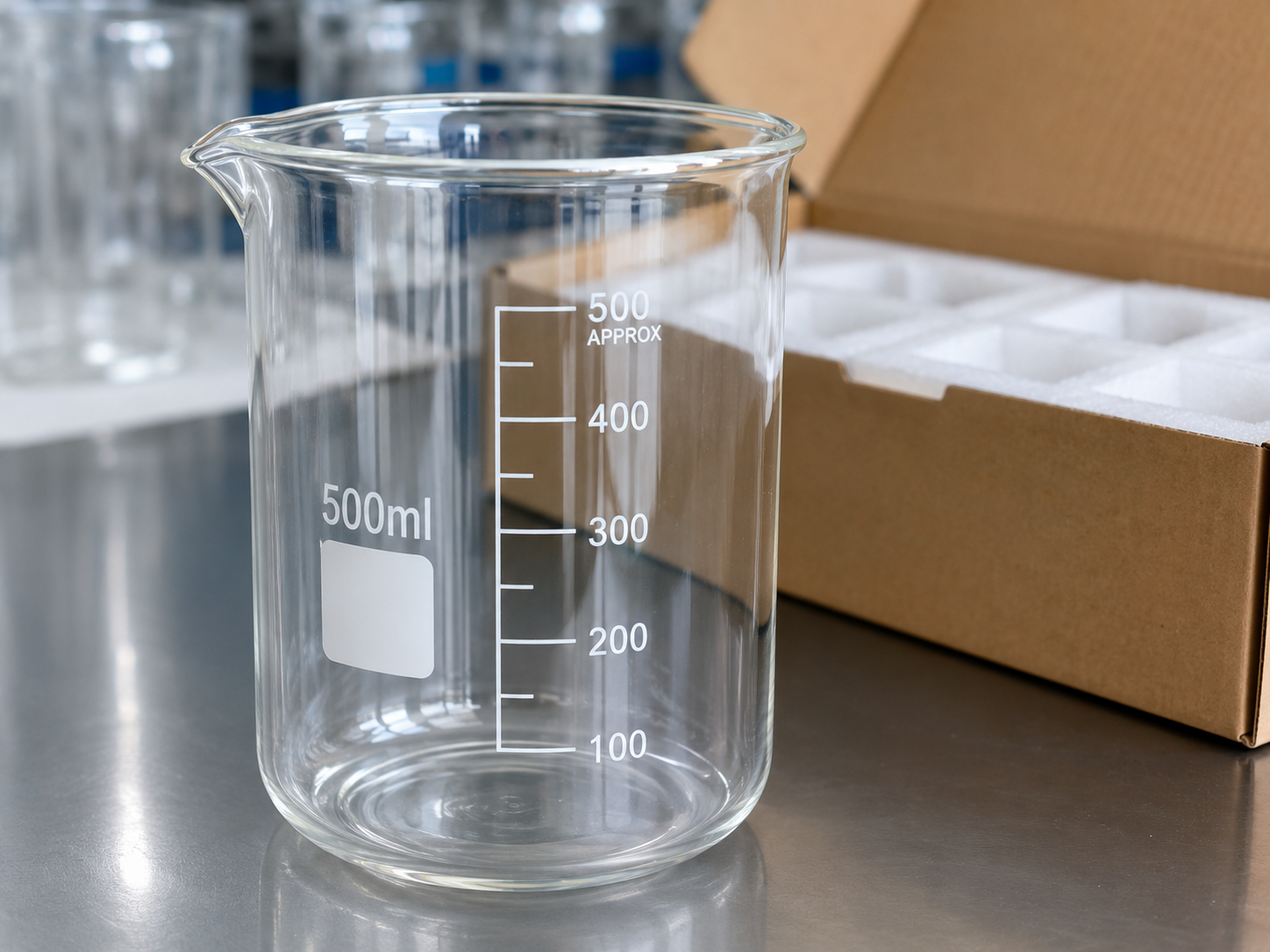
Do not compare quotes by capacity alone. A 250 mL low-form beaker and a 250 mL tall-form beaker are different products. A plain carton and an OEM-labeled export carton are also different orders.
When graduation readability matters for rough reference, compare Low Form Beakers with Double Capacity Scale Wholesale and confirm the capacity list before quoting. When material is part of the order, the borosilicate glass guide can help buyers ask better specification questions.
Quote-ready request
For a clean quote, send this information: beaker type, capacity list, quantity per capacity, glass material, graduation requirement, destination country, packing needs, and label or carton mark requirements.
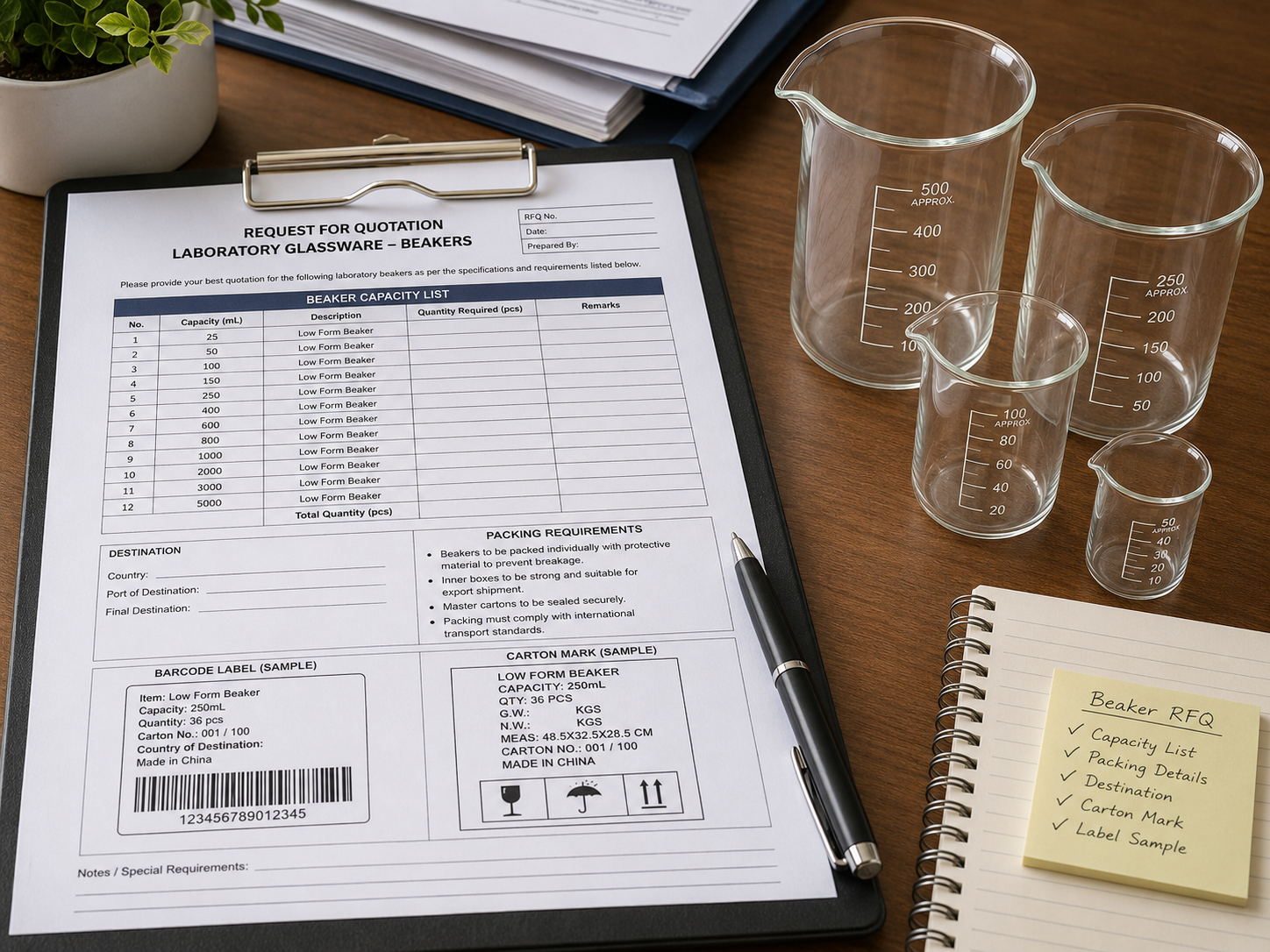
If the beakers are part of a teaching set, list the number of each size per set. That helps the supplier plan mixed cartons and repeat orders.
When the list is ready, send beaker type, capacity, quantity, destination country, and packing requirements through the contact page.
Common beaker buying scenarios
A school lab usually needs beakers as part of a balanced bench set. The order may include several capacities so students can mix, heat, and transfer liquids without sharing one size for every task. A chemistry lab may need borosilicate beakers for routine bench workflows, while a distributor may care more about product-code stability and carton labeling.
The same beaker keyword can hide different needs. One buyer may want low-form Griffin beakers for general teaching. Another may want tall-form beakers for selected mixing tasks. A third may need heavy packing for export resale. Ask how the beaker will be used before comparing quotes.
Mistakes to avoid
The biggest mistake is treating beaker markings like calibrated volume marks. A beaker is useful, but it is not a substitute for a measuring cylinder, volumetric flask, pipette, or burette. The second mistake is ordering only one capacity. Most labs need several sizes so the vessel matches the liquid volume.
Also avoid mixing beaker types in one vague product line. Low-form, tall-form, and heavy-wall beakers should be listed separately. This makes the quote clearer and makes receiving easier.
If a buyer asks for tall-form beakers with easier rough reading, separate Tall Form Beaker with Double Capacity Scale Wholesale from standard low-form beakers in the quote. If the workflow requires preparing one exact volume, use the volumetric flask guide instead of relying on beaker marks.
Final procurement checklist
Before approving the order, check that the product name, capacity, material, quantity, packing, and label requirements match the buyer’s actual workflow. Keep product codes in the purchasing file so future reorders do not rely on memory or old photos.
For export or distributor orders, confirm carton strength, inner protection, barcode labels, carton marks, and OEM packaging before pricing is finalized. These details affect cost and should not be treated as afterthoughts.
A useful final request includes product links or a product list, specifications, quantity by size, destination country, and packing requirements. If the lab has strict class, tolerance, compatibility, or certification needs, ask for supporting documents before publication or purchase.
For a larger purchasing list, start from the products catalog and collect product links, capacities, and quantities before requesting a quote.
How to compare supplier quotes
Compare quotes line by line instead of only checking the total price. Make sure both suppliers are quoting the same material, capacity, class or tolerance, accessory set, packing method, and label requirement. If one quote includes export cartons, barcode labels, or private-label packing and another does not, the unit prices are not directly comparable.
Ask for missing details before confirming the order. A clear specification table saves time during receiving and helps the buyer reorder the same item later.
Publish-ready note
Before publishing this article on the website, review any product-specific links you add. Exact standards, tolerances, temperature limits, vacuum suitability, autoclave use, and chemical compatibility should come from the relevant product page or document. If that evidence is not available, keep the wording as a buying check rather than a claim.
Internal links for buyers
Compare available beakers with related flasks and measuring cylinders. For larger purchasing lists, start from the products catalog.
To request pricing, send capacity, quantity, destination country, and packing requirements through the contact page.
FAQ
What is a beaker used for?
A beaker is used for holding, mixing, heating, stirring, and pouring liquids during routine lab work.
Is a beaker accurate for measuring volume?
No. Beaker graduations are usually rough marks. Use a graduated cylinder, volumetric flask, pipette, or burette for better volume work.
What is the difference between low-form and tall-form beakers?
Low-form beakers are shorter and wider. Tall-form beakers are narrower and taller. The best choice depends on mixing, heating, and splash-control needs.
What should buyers check before ordering beakers?
Check capacity, form, glass material, graduation, spout, quantity, product code, and packing requirements.