
Tall Form (Berzelius) beakers

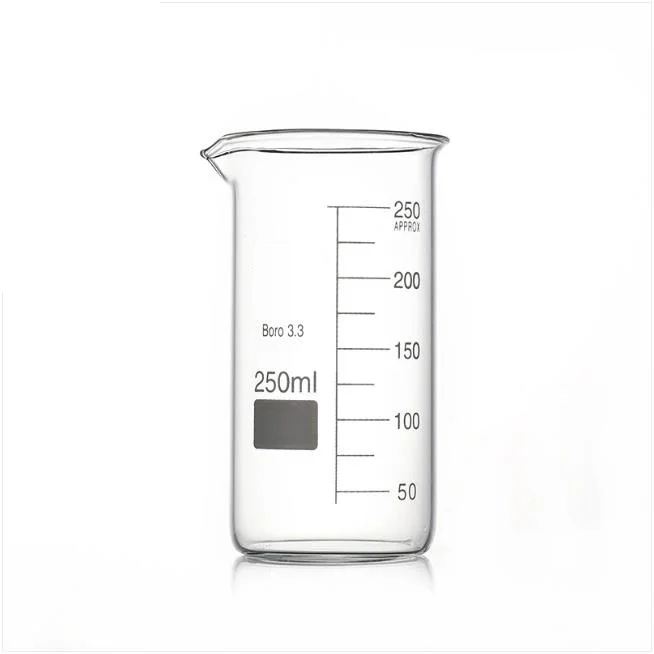
- Tall, slim profile (Berzelius form) for deeper liquid columns and compact bench footprint
- Helps reduce evaporative loss in processes where exposure surface area matters
- More gradual, controlled heating behavior vs wider-base low-form designs (application-dependent)
- RFQ-friendly for bulk buyers: mixed sizes, carton-based MOQ, export packing list
Tall Form (Berzelius) beakers feature a slimmer, taller profile—ideal for deep-volume processes, reduced evaporative loss, and clearer phase separation and settling observations.
Tall & slim geometry (approx. 2× height-to-diameter) for deep liquid columns
Cleaner handling for workflows where evaporation/splash control matters
B2B-ready ordering: mixed-size RFQ, carton-based MOQ, bulk pricing
Product Specifications
| Product Code | Capacity (ml) | O.D. (mm) | Height (mm) |
| B10030050 | 50ml | 40 | 68 |
| B10030100 | 100ml | 47 | 84 |
| B10030150 | 150ml | 54 | 97 |
| B10030250 | 250ml | 60 | 120 |
| B10030400 | 400ml | 70 | 137 |
| B10030500 | 500ml | 75 | 140 |
| B10030600 | 600ml | 80 | 150 |
| B10030800 | 800ml | 90 | 175 |
| B10031000 | 1000ml | 95 | 180 |
| B10032000 | 2000ml | 120 | 240 |
| B10033000 | 3000ml | 135 | 280 |
Tall Form (Berzelius) beakers are general-purpose beakers designed with a higher, narrower body than low-form (Griffin) beakers. This geometry creates a deeper liquid column and a smaller surface area-to-volume ratio, which can help when you want less evaporative loss, improved settling/phase separation visibility, or a more controlled handling profile.
Compared with low-form beakers, tall-form beakers often suit workflows where vertical depth matters (e.g., observing interfaces, decanting after settling, or processes that benefit from gradual heating behavior).
Note: Graduations on beakers are typically for reference measurements. For certified volumetric accuracy, use volumetric glassware.
Quality & Manufacturing Control
We focus on the structural integrity required for the taller geometry of Berzelius beakers.
Tall-form beakers rely on a higher sidewall. Consistent wall thickness along the height helps maintain mechanical stability and reduces localized stress points during routine heating and handling. This is especially relevant when buyers stock multiple sizes and expect consistent user experience across the range.
A tall profile changes pouring dynamics. Stable rim/spout forming improves decanting control and reduces drip/rollback during transfers. For distributors, consistent pour behavior reduces end-user complaints and improves repeat reorder rates.
Graduation clarity depends on printing alignment, contrast, and resistance to repeated cleaning. On taller bodies, consistent graduation placement improves quick-reading usability during routine prep work.
Control Point A — Vertical wall uniformity for tall profiles
Tall-form beakers rely on a higher sidewall. Consistent wall thickness along the height helps maintain mechanical stability and reduces localized stress points during routine heating and handling. This is especially relevant when buyers stock multiple sizes and expect consistent user experience across the range.
Control Point B — Rim & spout forming consistency (pouring control on a taller body)
A tall profile changes pouring dynamics. Stable rim/spout forming improves decanting control and reduces drip/rollback during transfers. For distributors, consistent pour behavior reduces end-user complaints and improves repeat reorder rates.
Control Point C — Graduation placement & readability on taller bodies
Graduation clarity depends on printing alignment, contrast, and resistance to repeated cleaning. On taller bodies, consistent graduation placement improves quick-reading usability during routine prep work. (If you have wash/solvent resistance testing, add it here as your proof.)
For Distributors & Wholesalers
Designed for replenishment lines and mixed-size ordering
- Tier pricing available by carton / multi-carton volume
- Mixed-size RFQ supported (send your list of sizes + quantities)
- Export packing list with carton size & gross weight per size
- Optional carton marking/SKU labeling support (on request)
For Universities & Lab Procurement
- Packing confirmation for receiving and inventory planning
- Core-size recommendations by lab type (teaching vs research)
- Documentation support (packing list, identification)
For OEM / Private Label
- Private label packaging and logo printing options (on request)
- Sample confirmation workflow before mass production
- Suitable for standardized lab consumables lines
FAQ
- When should I choose tall form over low form (Griffin)?
Choose tall form when you prefer a deeper liquid column, want to help reduce evaporation, or need clearer settling/phase separation observation. Low form is usually chosen for maximum stability and broad, general-purpose handling. - Does the tall form design reduce evaporation?
A taller, slimmer profile can reduce exposed surface area compared with wider vessels, which may help reduce evaporative loss in certain workflows. - Are tall form beakers suitable for titration work?
Some guides describe tall-form beakers as commonly used for titration-related handling due to their geometry. (For accurate titration measurement, burettes and volumetric glassware remain standard.) - Are graduations calibrated for accuracy?
Beaker graduations are typically for reference. For certified accuracy, use volumetric glassware. - Can I order mixed sizes in one RFQ?
Yes. Send your size + quantity list and destination, and we’ll quote tier pricing, MOQ, and lead time. - What is the MOQ?
MOQ is carton-based and varies by size. See the specification table (or request the packing list PDF). - Do you provide export packing details?
Yes—packing format, carton dimensions, and gross weight can be provided per size for bulk shipping planning. - Is this product suitable for institutional procurement?
Yes. We can provide packing confirmations and documentation to support receiving and inventory workflows. - Do you offer OEM/private label?
OEM options (logo/packaging) can be evaluated on request based on your target volume and artwork needs.
Related products
-
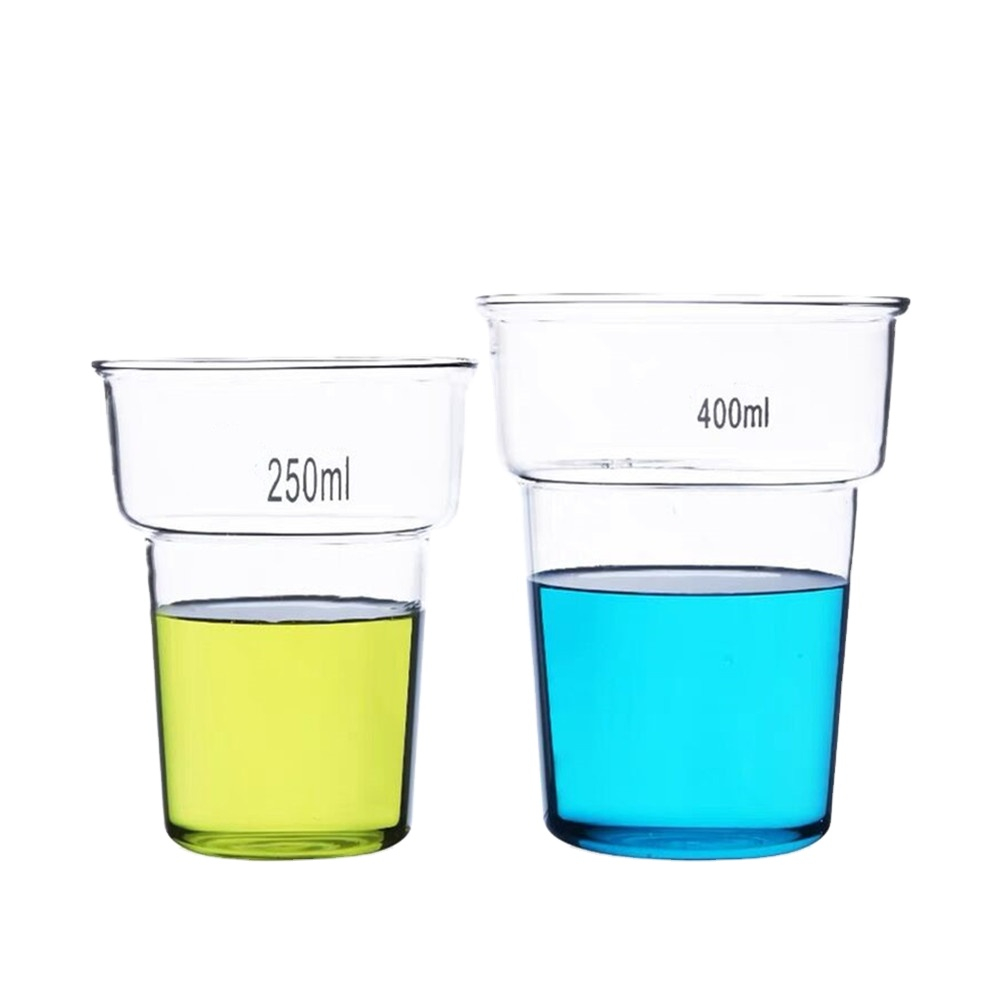
Borosilicate Glass Dyeing Beaker with Flanged Rim
Typical Applications Specifications OEM / B2B Supply We support bulk orders, OEM labeling, and…
-
Tall Form (Berzelius) beakers
Tall Form (Berzelius) beakers feature a slimmer, taller profile—ideal for deep-volume processes, reduced evaporative…
-
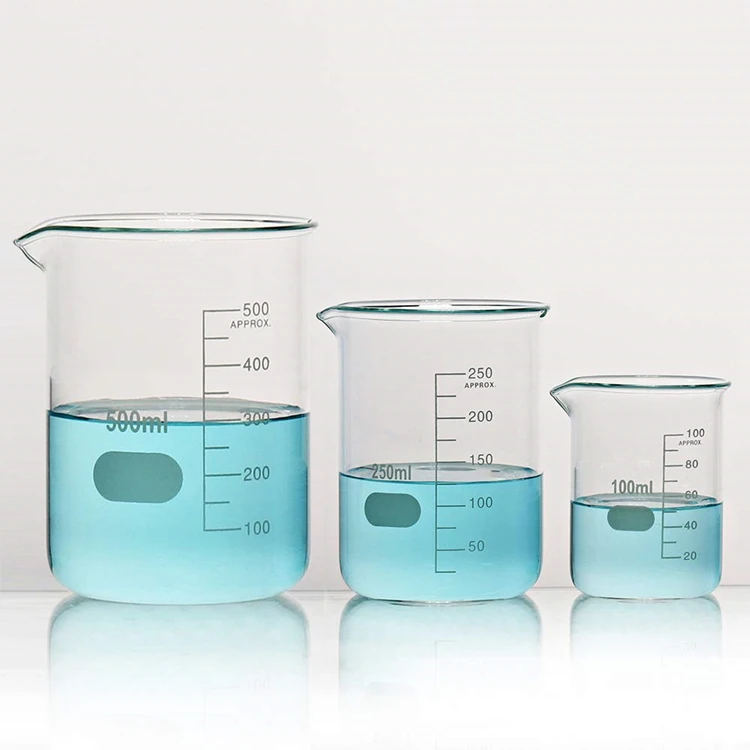
Low Form (Griffin) Beakers
Product Specifications Product Code Capacity (ml) O.D. (mm) Height (mm) B10010005 5ml 22 30…